Understanding Multi-Tenancy Architecture And Its Benefits For SaaS Founders
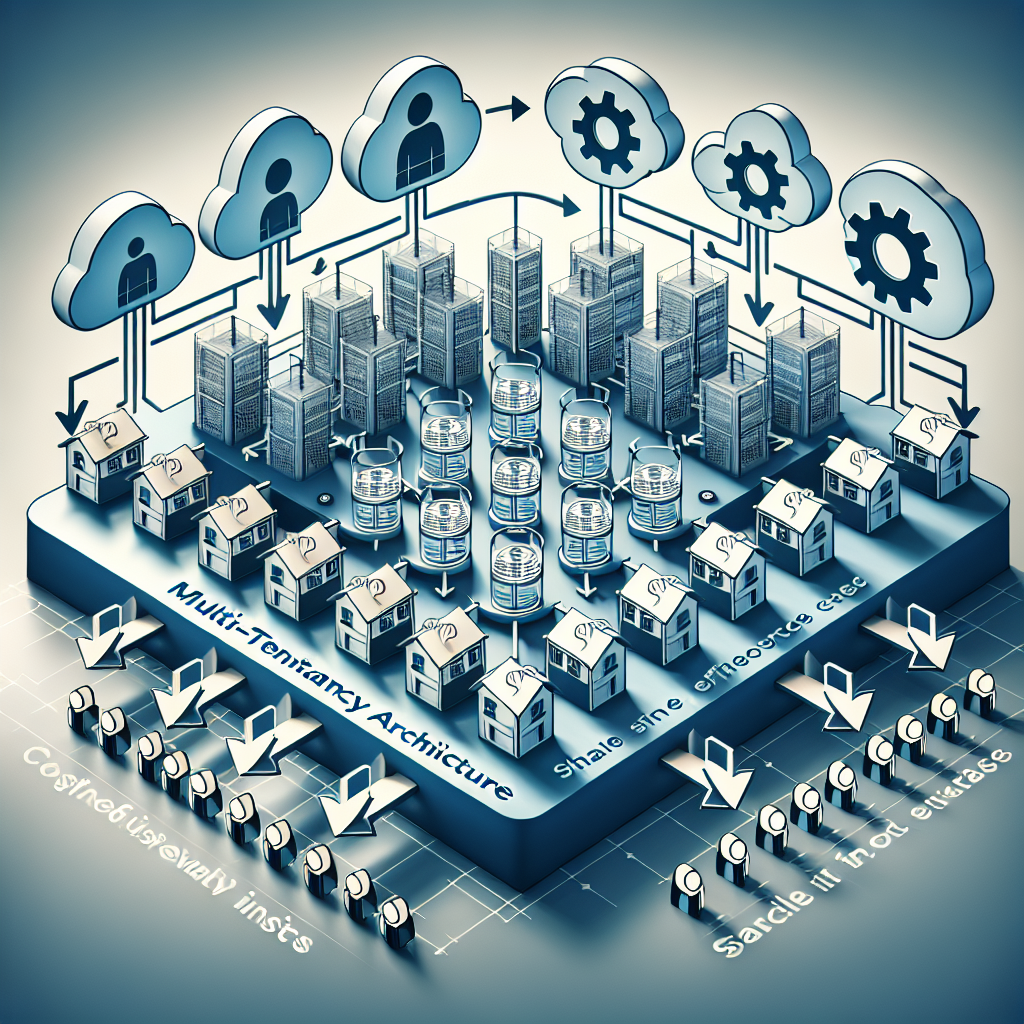
As technology continues to advance at a rapid pace, businesses are constantly looking for ways to streamline their operations and improve efficiency. This is especially true for software-as-a-service (SaaS) companies, which rely heavily on providing a seamless and user-friendly experience for their customers. One way that SaaS companies can achieve this is through the use of multi-tenancy architecture.
Multi-tenancy architecture is a software architecture model in which a single instance of a software application serves multiple tenants (customers). This means that each tenant has their own isolated and secure database, but all tenants share the same application and infrastructure. In simpler terms, it's like having multiple apartments in a building, where each apartment has its own set of keys and is completely independent, but they all share the same building and amenities.
Why is multi-tenancy architecture beneficial for SaaS founders?
There are several benefits that SaaS founders can reap from implementing a multi-tenancy architecture for their software. Let's take a look at some of the most significant ones:
- Cost savings: With multi-tenancy, SaaS companies can save on infrastructure costs as they only need to maintain one application and database instead of separate ones for each tenant. This also results in lower operational costs and allows for easier scalability as the business grows.
- Efficiency and consistency: Multi-tenancy allows for a more efficient use of resources, as updates and maintenance only need to be done once for all tenants. This ensures that all tenants are using the most up-to-date version of the software, leading to a more consistent and seamless experience.
- Customization and personalization: Multi-tenancy architecture allows for customization and personalization at the tenant level. This means that each tenant can have their own unique settings, features, and branding, without affecting the other tenants.
How Laravel makes multi-tenancy implementation easier
Laravel is a popular open-source PHP web application framework that is widely used by developers to build powerful and scalable web applications. One of the reasons for its popularity is its support for multi-tenancy architecture.
Laravel provides developers with the necessary tools and features to easily implement multi-tenancy in their applications. This includes support for tenant identification, database separation, and tenant-specific migrations. Additionally, Laravel also has a vibrant community and a vast array of packages and libraries that can further simplify the implementation process.
One such package is TenancyBox, a ready-made starter kit that provides all the necessary components to build a multi-tenancy SaaS application using Laravel. TenancyBox not only speeds up development but also ensures that best practices are followed, resulting in a secure and efficient multi-tenant application.
Conclusion
In conclusion, multi-tenancy architecture offers numerous benefits for SaaS founders, including cost savings, efficiency, and customization. With the support of frameworks like Laravel and packages like TenancyBox, implementing multi-tenancy in SaaS applications has become easier and more efficient than ever before. So, if you're a SaaS founder looking to improve your operations and provide a better experience for your customers, consider implementing multi-tenancy architecture in your application.
#multi-tenancy #architecture #SaaS #founders #Laravel #TenancyBox